Blood Sugar Friendly Recipes for Balanced Everyday Meals
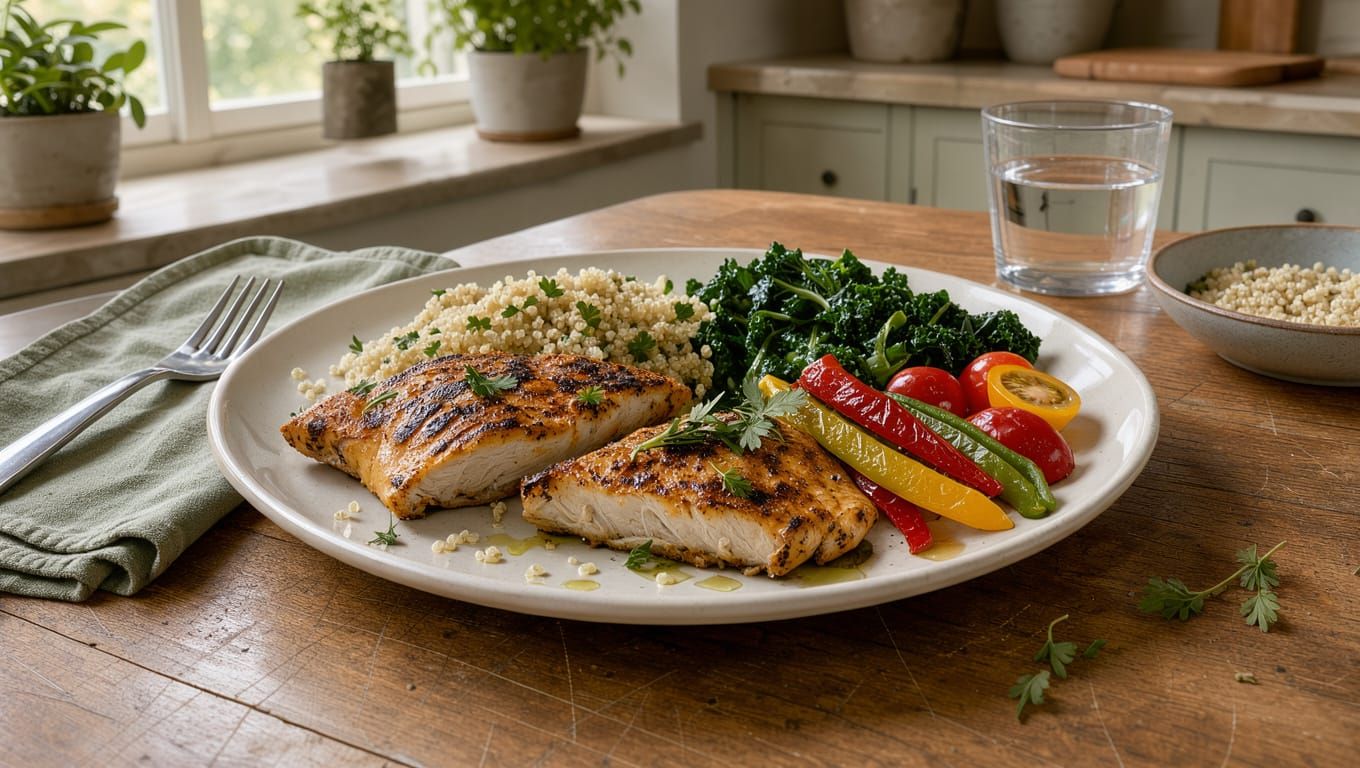
Blood sugar friendly recipes are balanced meals that pair non-starchy vegetables with protein and quality carbohydrates in portions suited to us. Our needs and food preferences differ, so there is no single menu that fits everyone. When we plan balanced everyday meals, familiar ingredients can make choices feel simple and satisfying.
We can use practical meal ideas as a starting point, not as a prescription. A busy morning, a family dinner, or a favorite takeout meal may each call for a different approach. Small changes can fit the way we already eat, without asking us to give up foods we enjoy.
We can think about the foods we like, our routine, and what helps us feel satisfied. Then we can choose one manageable adjustment, such as adding a vegetable or changing a side. The goal is a pattern we can return to, rather than a perfect meal every time.
Key Takeaways
- Build meals with vegetables, protein, and quality carbohydrates.
- Use the Diabetes Plate as a visual guide.
- Check serving size when reading a Nutrition Facts label.
- Choose fiber-rich foods that suit our tastes and routine.
- Notice personal glucose patterns with our care plan.
We can start with one familiar meal and make a small, satisfying change.
How the Diabetes Plate Shapes Blood Sugar Friendly Recipes
A 9-inch plate gives us a quick visual guide: half vegetables, one-quarter lean protein, and one-quarter quality carbohydrate foods. This simple pattern helps us build blood sugar friendly recipes without measuring every ingredient.
The ADA Diabetes Plate divides the plate into these three parts, then pairs the meal with water or a zero-calorie drink, such as unsweetened tea or coffee.

This Alpine Berry is Helping to Support Healthy Blood Sugar
Use the Diabetes Plate as a visual template
Non-starchy vegetables include broccoli, cauliflower, leafy greens, mushrooms, peppers, tomatoes, and zucchini. Quality carbohydrate foods include whole grains, starchy vegetables, beans and legumes, fruit, milk, or yogurt.
The ADA Diabetes Plate guide shows how this pattern can shape meals across different eating styles. We can adjust our food choices while keeping the visual balance in mind.
Adapt combination meals and pizza
Soups, casseroles, sandwiches, and pasta often mix food groups in one dish. We can name the ingredients and estimate their proportions, even when the meal does not fit neatly into separate plate sections.
For combination meals, identify the foods and consider how their portions fit the plate pattern.
Pizza can fit our meal plans, too. We can choose a thin or vegetable-based crust, add vegetable toppings, and serve a side salad.
For pizza night, add a side salad and choose one or two slices with vegetable toppings.
Carbohydrate Portions and Label Reading
A 15-gram carbohydrate choice is a useful reference, but our needs at a meal depend on personal factors such as activity, body size, and hunger. It is a counting tool, not a meal target for everyone.
There is no single ideal number of carbohydrate grams for every meal. One carbohydrate choice contains about 15 grams, which can help us compare carbohydrate choices when counting.

This Alpine Berry is Helping to Support Healthy Blood Sugar
The Nutrition Facts label lists total carbohydrate, which includes sugar, starch, and fiber. We can compare that line with the serving size to understand how much carbohydrate is in the portion listed.
Label serving sizes reflect amounts people typically eat or drink, not a recommendation for how much we should have. The amount we eat may be smaller or larger, so the listed nutrients may not match our portion.
Percent Daily Value uses 5% or less as a low amount and 20% or more as a high amount. These figures can help us compare nutrients, but they do not set a personal meal goal.
When a package has more than one serving, we can check how many servings our portion includes. That keeps the label’s numbers tied to the amount we actually eat.
Before comparing two packages, make sure we are looking at the same serving amount.
Added Sugar: What the Label Tells Us
The added-sugars line is the clearest place to compare how much sugar has been added to a packaged food. It helps us separate added sugar from sugars that occur naturally in some foods.
The FDA Daily Value for added sugars is 50 grams per day, based on a 2,000-calorie daily diet. Percent Daily Value gives us another way to compare products.

This Alpine Berry is Helping to Support Healthy Blood Sugar
Find added sugars and use Percent Daily Value
For added sugars, 5% Daily Value or less is low, while 20% or more is high. These guideposts help us spot differences between similar packaged foods and drinks.
The Dietary Guidelines for Americans recommends limiting calories from added sugars to less than 10% of total daily calories. That guideline describes a share of calories, not a fixed amount for each meal.
Separate total sugars from added sugars
Total sugars include both added sugars and naturally occurring sugars, such as those in fruit and milk. So a food with fruit or milk can list total sugars even when those sugars are not all added.
The Nutrition Facts label does not provide a Daily Value for total sugars. We can use the added-sugars line for the labeled comparison, while remembering that the serving size affects the numbers.
For example, plain yogurt may contain naturally occurring sugar from milk, while a sweetened version may also include added sugar. The total-sugars number alone does not show that difference.
When we compare products, use the same serving size and look at the added-sugars line rather than total sugars alone.
Fiber-Rich Breakfast and Snack Ideas
Fiber can come from many everyday foods, and the research on fiber interventions offers useful context without guaranteeing how one recipe will affect us. Different kinds of fiber also act in different ways during digestion.
A 2024 systematic review included 26 studies of dietary-fiber interventions for type 2 diabetes. Most studies reported improved glycemic control and weight management with increased fiber intake.
The interventions included high-fiber diets plus acarbose in two studies, fiber supplements in 14 studies, and high-fiber diets in 10 studies. The findings describe groups and approaches, not a promise about any one muffin.
Soluble fiber absorbs water and forms a gel, which can delay stomach emptying and slow digestion. Insoluble fiber can add bulk to stool and speed its movement through the gut.
Pumpkin-Banana Muffins take 10 minutes to prepare and 20 minutes to cook. The recipe yields 12 muffins, with 140 calories, 20 grams of total carbohydrate, 6 grams of fat, and 3 grams of protein per muffin.
Apple Cider Muffins take 20 minutes to prepare and 15 minutes to cook. The recipe yields 12 muffins, with 150 calories, 23 grams of total carbohydrate, 6 grams of fat, and 4 grams of protein per muffin.
For a more filling idea, pair a muffin with a protein-containing food such as cheese or nuts.
Meal Timing, Snacks, and Glucose Patterns
A steady eating rhythm and a snack that combines protein, healthy fats, and fiber can help us plan for hunger between meals. Regular timing gives us a routine to work with.
The ADA recommends eating at regular times and allowing 2-3 hours between meals for blood glucose to lower before the next meal.
Healthy snacks can combine foods in simple ways. We might choose fruit with cheese or nuts, hummus with carrots or celery, or nut butter with apple slices.
- Fruit with cheese or nuts
- Hummus with carrots or celery
- Nut butter with apple slices
Buffalo Tempeh "Wings" take 15 minutes to prepare and 25 minutes to cook. They yield 4 servings, with 180 calories, 13 grams of total carbohydrate, 9 grams of fat, and 14 grams of protein per serving.
Italian Beans and Greens Salad takes 10 minutes to prepare and 10 minutes to cook. It yields 4 servings, with 200 calories, 17 grams of total carbohydrate, 10 grams of fat, and 11 grams of protein per serving.
If we track blood glucose, we can record levels before meals and about 2-3 hours afterward for a few days. Those notes can help us notice how different meals affect our own levels.
If we track glucose, a few days of before-and-after meal notes can help us discuss personal patterns with our care team.
Dinner Recipes and Glycemic Index in Context
A recipe’s glycemic response can depend on preparation and on the person eating it, so the glycemic index is only one part of meal planning. Our own response may differ from someone else’s.
Research on glycemic index and glycemic load has had complex, inconsistent results for fasting blood glucose and hemoglobin A1c.
Glycemic index can vary with food preparation, even among foods in the same category. A 2023 Cochrane review found very little difference, if any, between low-glycemic-index or low-glycemic-load diets and other diets for glycemic control and cardiovascular risk in people with overweight or obesity.
The review’s evidence had low-to-moderate certainty. The ADA Standards of Care in Diabetes in 2023 also described research on these measures as complex, with inconsistent results for the two blood measures.
- Slow Cooker Pork and Pumpkin Stew takes 15 minutes to prepare and 4 hours to cook. It yields 8 servings, with 180 calories, 18 grams of total carbohydrate, 6 grams of fat, and 15 grams of protein per 1-cup serving.
- Herbed Roasted Cod and Roasted Summer Vegetables Over Quinoa takes 15 minutes to prepare and 20 minutes to cook. It yields 2 servings, with 390 calories, 42 grams of total carbohydrate, 14 grams of fat, and 28 grams of protein per serving.
- A Spanish omelet offers another dinner option, combining vegetables and eggs.
Glycemic index and glycemic load can inform a food choice, but neither guarantees the same glucose response for everyone.
We can keep taste, cooking habits, and the rest of our meal in view when choosing dinner.
We can choose dinners that fit our preferences and use our own care plan to guide any glucose-focused adjustments.
Conclusion
We can make a balanced meal feel manageable by starting with familiar foods and one practical change. A recipe we already enjoy can be a useful place to begin, with the Diabetes Plate serving as a flexible guide.
We can plan one familiar meal, then make a note of what worked for our schedule, appetite, and preferences. That small check-in can help us decide what to keep or adjust next time.
For our next meal, choose a recipe we enjoy, use the plate method as a guide, and note what helps us feel satisfied.
FAQ
Do we need to avoid all carbohydrates to manage blood sugar?
No, we do not need to avoid all carbohydrates to manage blood sugar. Quality carbohydrate foods include whole grains, beans and legumes, fruit, starchy vegetables, milk, and yogurt. These foods can fit into balanced meals. The amount that suits us depends on personal needs, so our meal portions may differ from someone else’s.
What counts as one carbohydrate choice?
One carbohydrate choice contains about 15 grams of carbohydrate. We can use this amount as a counting reference when comparing foods or planning meals. It is not a universal target for each meal, since personal needs and food choices differ. Our activity, body size, appetite, and hunger can all shape what works for us.
Does the serving size on a food label tell us how much to eat?
No, the serving size on a food label does not tell us how much to eat. It reflects an amount people typically eat or drink, rather than a recommended portion. We can compare the label’s listed nutrients with the amount we choose. If we eat more or less than one serving, the nutrient amounts change with it.
Are the sugars in fruit and milk added sugars?
No, sugars in fruit and milk are not automatically added sugars. Total sugars include naturally occurring sugars in foods such as fruit and milk, along with any added sugars. The Nutrition Facts label does not give total sugars a Percent Daily Value. We can check the separate added-sugars line to see the amount added during processing or preparation.
How long should we leave between meals?
The ADA recommends eating at regular times and allowing 2-3 hours between meals. That space gives blood glucose time to lower before the next meal. A regular routine can help us plan meals and snacks around hunger. Our daily schedule may shape the exact meal times, while the spacing remains a useful guide.
Does choosing a low-glycemic-index food guarantee a smaller glucose response?
No, choosing a low-glycemic-index food does not guarantee a smaller glucose response for each person. Preparation can change a food’s glycemic index, and individuals can respond differently to the same food. Research on glycemic index and glycemic load has also had complex and inconsistent results. We can use these measures as one consideration, not as a promise.